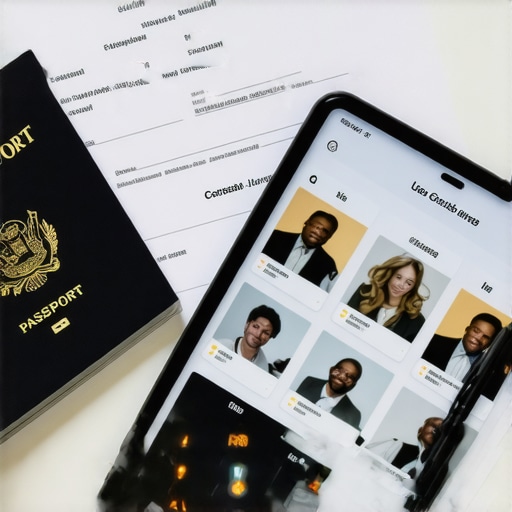
I’ll never forget the cold sweat I felt when the officer looked up from his screen, adjusted his glasses, and asked me about a joke I made on Facebook back in 2017. There I was, with all my documents perfectly filed, thinking I was ready. But I had completely forgotten that my digital footprint was sitting right there on his desk. It was a visceral realization: your online life isn’t separate from your legal reality anymore. In the world of immigration law, your profile picture might be just as important as your bank statement. Today, I’m going to share the hard lessons I learned so you don’t have to face that same panic. We’ll dive into what they’re actually looking for and how you can protect your future.
The digital shadow following you into the consulate
I used to tell everyone that privacy settings were a brick wall. I was wrong. Early in my journey, I didn’t realize that an immigration lawyer would emphasize social media as much as the actual forms. The Department of State now requires most visa applicants to provide their social media identifiers, a rule that became standard around 2019 to enhance national security vetting. This means the person deciding your fate has a direct window into your past. If you’ve ever wondered que responder si el oficial te pregunta por tu historial de redes sociales, you’re already ahead of where I was. I made the mistake of thinking they only cared about my current job, but they were actually looking for consistency. They want to see if the person on the paper matches the person on the screen. If your LinkedIn says you’re a manager but your Instagram shows you working a side gig you didn’t declare, you’ve got a problem. This is often por qué el oficial consular puede negar tu visa basandose en la seccion 221g while they investigate further. Have you ever felt like your online life was working against your real-life dreams?
Is the government really scrolling through my old tweets?
The short answer is yes, they can and often do. It’s not just about the posts you made yesterday. They are looking for red flags related to illegal activity, radicalization, or—most commonly—intent to stay. If you’re applying for a tourist visa but your Twitter is full of posts about “moving to America forever,” you’re handing them a reason to doubt you. They also look at your connections. They might even check lo que un oficial migratorio puede revisar en tu computadora personal or phone if you’re at a port of entry. It sounds intense, but it’s the reality of modern immigration procedures. I learned the hard way that a single misunderstood comment can trigger a deep dive into por qué el oficial de inmigración pregunta sobre tus viajes pasados and how they align with your digital check-ins. Don’t let a forgotten post from five years ago be the reason you get a denial.
Check your profiles before the officer does
The very first thing I did after my own scare was to sit down and perform a ‘digital audit’ as if I were a federal agent. You need to look at yourself through the lens of immigration law, where every post is a piece of evidence. Start by opening an incognito browser and searching for your full name, nicknames, and email addresses. I once helped a close friend, Miguel, who was shocked to find an old blog post where he joked about ‘staying in the US forever’ while he was there on a summer exchange. To the government, that isn’t a joke; it’s a confession of preconceived intent. If you find something that contradicts your current application, you need to consult an immigration lawyer immediately to discuss how to address it. Don’t just hit delete and assume it’s gone; the internet has a long memory, and appearing to hide information is often worse than the information itself. Knowing como prepararte si te toca un oficial de inmigración muy estricto starts with knowing exactly what they can find out about you.
What to do when they ask for your password
It’s a common fear: standing at the border while an officer demands your phone. While you have rights, the rules at a port of entry are different than on a city street. I remember the tension in the room when a colleague was asked to unlock his device during a secondary inspection. The reality is that refusing can lead to an immediate denial of entry or a canceled visa. You should be aware of como reaccionar si cbp te pide la contraseña de tu teléfono before you even pack your bags. A good rule of thumb I live by is to ‘sanitize’ your devices before travel. This doesn’t mean being deceptive; it means removing sensitive work data or private conversations that could be easily misinterpreted by someone looking for a reason to deny you. Remember, they are looking at lo que un oficial migratorio puede revisar en tu computadora personal to find inconsistencies in your story.
How to handle the digital ghosts of your past
If your audit reveals a major discrepancy—like a photo of you working while on a tourist visa—you are entering dangerous territory. This is where the expertise of an abogado de inmigración becomes non-negotiable. I’ve seen people try to ‘fix’ these issues by using fake documents to cover their tracks, which is a catastrophic mistake. Understanding el riesgo de usar documentos falsos is vital because fraud is often a permanent bar to immigration. If the government finds a lie, you might find that por qué un perdón por fraude es más difícil de conseguir que otros becomes the central focus of your life for the next decade. Instead of panic-deleting, focus on gathering evidence that supports your current, legal situation. If you received a letter asking for more details because of something they found online, you must learn como responder a una solicitud de evidencia adicional de manera efectiva to provide the necessary context. My friend Miguel eventually got his visa, but only because we prepared a detailed explanation for that old blog post, proving his circumstances had changed and his current intent was strictly for a temporary stay.Let’s dig deeper into a nuance that almost everyone misses. Most people think hiring an abogado de inmigración is a luxury reserved for those with criminal records or complex deportation cases. I used to think the same until I realized that immigration law isn’t about following instructions—it’s about building a defensive perimeter around your future. The biggest myth? That the forms are the hard part. The forms are just the tip of the iceberg; the real work is in the strategy of disclosure. I’ve seen people try to save money by doing it themselves, only to realize that por qué no debes aceptar consejos legales de amigos que pasaron por lo mismo is the best advice they never took. Your friend’s case might look identical to yours, but one tiny difference in how you handled a digital interaction or a past job can change the entire outcome.
The ‘Friend Law’ trap that ruins perfectly good cases
There’s a dangerous phenomenon I call ‘Friend Law.’ It’s when you base your entire legal strategy on what worked for someone else three years ago. This is a massive mistake because policies shift constantly. For example, many assume that minor financial gaps don’t matter, but por qué el oficial de inmigración puede pedir tus estados de cuenta is becoming a standard hurdle to prove you won’t become a public charge. Another trap is the ‘Notario’ scam. I cannot stress this enough: como evitar que un notario arruine tus papeles para siempre should be your first priority. These individuals often claim to have ‘inside’ connections, but in reality, they lack the legal training to handle the nuances of a shifting legal landscape. One wrong click or one ‘embellished’ detail on your behalf can lead to a lifetime ban for fraud.
Does the government check more than just my digital posts?
The short answer is a resounding yes. While social media is the current hot topic, the vetting process extends to your financial history, medical records, and even past addresses. This is why por qué tu abogado debe estar presente en la entrevista de residencia is so vital; they act as a buffer and a witness to ensure the officer stays within the legal bounds of questioning. If you have a skeleton in your closet, like an old citation, you must learn como evitar que un arresto por dui arruine tu trámite de residencia before the interview, not after. According to a landmark study by the American Immigration Council, individuals with legal representation are statistically much more likely to obtain a favorable outcome because a lawyer knows how to frame these ‘digital and physical ghosts’ in the context of the law. Have you ever fallen into the trap of thinking a small detail didn’t matter? Let me know in the comments. We need to stop treating immigration like a DIY project and start treating it like the high-stakes legal battle it truly is.
Stop treating your legal papers like grocery receipts
Maintaining a clean legal record isn’t a one-time event; it is a lifestyle of extreme organization. After my own scare with the consulate, I realized that the real secret to success in immigration is what I call the ‘Digital Fortress.’ I don’t just throw papers in a drawer anymore. I use an encrypted cloud storage system with a very specific folder hierarchy: Identity, Financials, Travel, and Professional. Why? Because the government expects you to have answers instantly. For example, if you are an artist or athlete, you need to know como solicitar la visa de talento si eres artista o deportista, which requires years of documented press clippings and awards. If you lose those files now, you lose your chance at a green card three years from now. I personally use a tool like VeraCrypt for an extra layer of local encryption on my hard drive. It might sound like overkill, but when your entire future is at stake, ‘safe enough’ isn’t good enough. Keeping a meticulous log of your physical movements is also non-negotiable. I’ve seen people face massive delays simply because they had lo que sucede si olvidas declarar una salida del país en tu formulario. One missed weekend trip to Canada can look like a gap in residency or, worse, a deliberate omission. 
How do I keep my immigration record spotless for years?
Consistency is the only currency the government accepts. You need to ensure that every single document you file today matches what you filed five years ago. This is where a professional immigration lawyer provides the most value; they keep a master file of your history so you don’t accidentally contradict yourself. I predict that within the next few years, USCIS will fully transition to AI-driven vetting that cross-references your tax returns, social media, and travel history in real-time. This means that knowing por qué el oficial de inmigración puede pedir tus estados de cuenta is no longer just about the current application, but about showing a pattern of financial stability over a decade. If you are a business owner, you must be prepared for the government to prepararse para la visita sorpresa de uscis a tu lugar de trabajo. They are looking for the ‘long-term truth,’ not just the temporary version you put on a form. The American Immigration Lawyers Association (AILA) emphasizes in their practice advisories that ‘material consistency’ is the single most important factor in surviving a high-scrutiny interview. If you’re ever in doubt, remember that it’s much cheaper to consult an abogado de inmigración now than it is to fix a permanent bar for fraud later. My advanced tip for you today: Create a ‘life timeline’ spreadsheet. Every address, every job, and every visa stamp should be there. This makes it incredibly easy to probar que viviste en ee uu antes de una fecha específica when a new immigration relief program is announced. Don’t wait for a crisis to become organized; start your digital fortress today.
Hard-Won Secrets from the Other Side of the Desk
Reflecting on my own journey through the maze of immigration law, I realized that the biggest hurdle wasn’t the law itself, but my own assumptions. I learned that silence on social media isn’t always safety; sometimes, an active, clean, and professional presence tells a better story than a deleted profile. Immigration officers are humans too, and they appreciate clarity over mystery. I also discovered that your past isn’t a life sentence if you know how to frame it with honesty. If you find yourself in a situation where things feel stalled, you need to know que hacer si tu caso de inmigración aparece como suspendido sin motivo. The most important lightbulb moment for me was realizing that an immigration lawyer isn’t just someone who fills out forms; they are the architect of your legal narrative.
Tools That Kept My Sanity Intact
I didn’t get through this by luck; I used a specific set of resources that I still recommend to anyone starting their path. First, I lived by the USCIS Policy Manual—it’s the same playbook the officers use to judge your case. Second, I cannot recommend VeraCrypt enough for securing your digital life timeline so your private documents stay private. If you’re feeling overwhelmed by costs, don’t give up; look into como obtener ayuda legal si no tienes dinero para pagar un abogado. I also suggest keeping a physical binder alongside your digital one; there’s something about holding your evidence that builds confidence before an interview. Remember, por qué cambiar de abogado en medio de un juicio puede ser peligroso, so choose your team wisely from the start.
The Peace of Mind You Deserve
You have worked too hard and dreamed too big to let a simple digital mistake or a lack of organization derail your life. Navigating immigration law is a marathon, not a sprint, and every step you take toward being more organized is a step toward your permanent home. Don’t let the fear of the unknown stop you from taking action today. Even small details, like knowing como corregir errores ortográficos en tu certificado de naturalización, can save you years of headache later. You’ve got this, and the knowledge you have now is your greatest advantage. Have you ever found a post on your social media that made you think twice about your immigration status? Let me know in the comments below!
About the Author
Michele Capecchi
Attorney at Law - Managing Partner
Michele Capecchi is a distinguished Attorney at Law and Managing Partner with extensive expertise in the complex fields of immigration and international law. Serving as a primary contributor to immigrationprolaws.com, Michele brings a wealth of legal knowledge focused on Italian citizenship and cross-border legal matters. With a professional background that spans corporate law and international contracts, he provides a sophisticated perspective on the legal frameworks governing global mobility and residency. His role as a Managing Partner underscores his leadership and deep understanding of the intricate processes involved in navigating both domestic and international legal systems. Michele’s authoritative insights are grounded in years of practical experience handling diverse cases, making him a trusted voice for individuals and corporations seeking clarity in the often-challenging landscape of immigration law. He is dedicated to providing accurate, actionable information that helps clients achieve their goals while remaining compliant with evolving regulations. Beyond his technical proficiency, Michele is driven by a profound passion for helping people navigate the complexities of the law to build better lives and secure their futures across borders.
Un comentario en “Lo que los cónsules buscan en tus redes sociales antes de darte la visa”